
Facades & structures
Building facades, canopies, bridges, towers, landscape and water features. Grazing light up the architecture so the structure itself does the work, with programmable scenes for holidays, branding and events.
Dynamic color · LED retrofit
Full-color RGBW lighting for building facades, hotel lobbies, ballrooms, restaurants, theaters, pools and public spaces across San Diego — and for the systems already in your building that stopped doing what they were sold to do. Designed, installed, programmed, and commissioned by one licensed C-10 contractor.
Three ways this starts
Most of our dynamic color work arrives as one of three conversations. All three end the same way — a commissioned system with documentation and a warranty.
Building facades, canopies, bridges, towers, landscape and water features. Grazing light up the architecture so the structure itself does the work, with programmable scenes for holidays, branding and events.
Lobbies, atriums, ballrooms, restaurants, bars, theaters, retail and pool decks. Tunable white through the day, saturated color for events, and a schedule that runs it without anyone touching a switch.
LED conversion of legacy sources, and revival of color systems that are stuck on a preset, half dark, or controlled by software nobody has the password to. Often the fastest path to a dramatic change.
Exterior
Most facade lighting fails because it floods everything evenly and flattens the architecture. Done right, it finds the vertical elements — the pilasters, column lines, and bays that give a facade its rhythm — and grazes light up them, so the building's own structure does the work.
We install Signify / Color Kinetics IntelliHue luminaires, which means the same fixture delivers saturated color, high-quality tunable white, and everything between — with Chromasync color consistency so the fixture you replace in year four still matches the nineteen beside it.
Interior
Dynamic color isn't only a facade product. Inside, the value is usually different: a room that reads warm and intimate at dinner, bright and neutral for a morning meeting, and completely transformed for a wedding — without rewiring anything between.
Tunable white does most of the daily work; saturated color earns its keep on event nights and brand moments. Both live in the same fixture and the same control system.
Interior work usually needs more care with glare, color rendering and dimming behavior than a facade does — a wall you're looking at from thirty feet is more forgiving than a ceiling you're sitting under.
Retrofit
Plenty of San Diego buildings were lit beautifully ten years ago and have been quietly going dark ever since — failed drivers, a discontinued fixture line, a controller running a factory demo because the real show left with a startup tech.
When the conduit, pathway and power are already in place, a retrofit gets you most of the way to a new installation for a fraction of the disruption. We survey what's there and give you a straight answer on what's still supported, what has to be replaced, and what it costs.
How we price it
Every dynamic color proposal we write presents two fully-costed equipment paths, because the honest answer to "which fixture" is "it depends on your mounting geometry" — and you deserve to see that trade-off rather than have it decided for you.
Option A · Long-throw
Option B · Wash
Spread-lens accessories are available for both, so the final beam can be tuned after the mockup rather than guessed at during design. We'll tell you which one we'd pick and why — but you'll see both numbers.
Process
Renderings lie. Mounting distances, throw angles and surface finish decide what a space actually looks like, and no drawing settles that argument. So we put fixtures in the room, or on the building, before you commit.
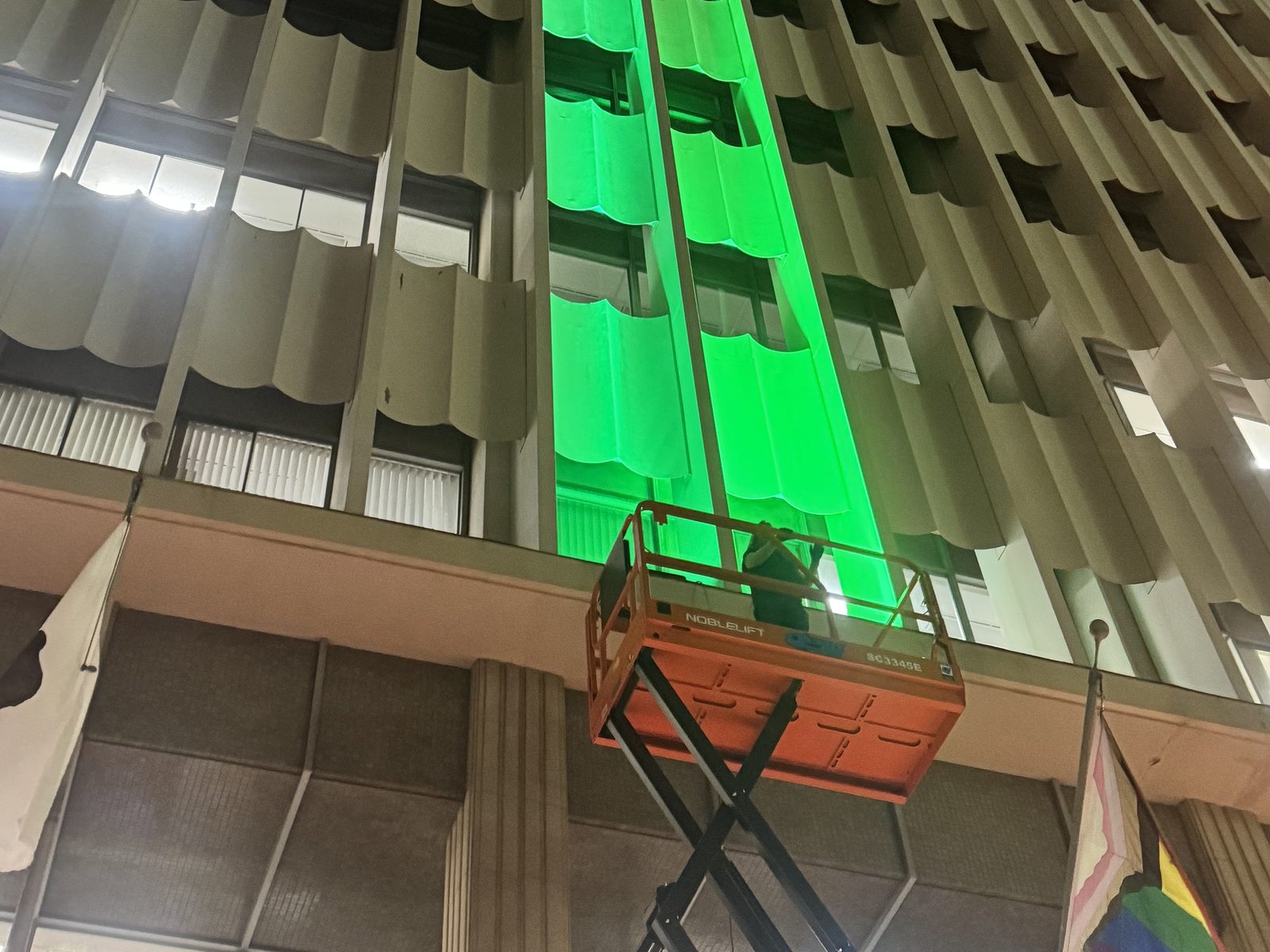
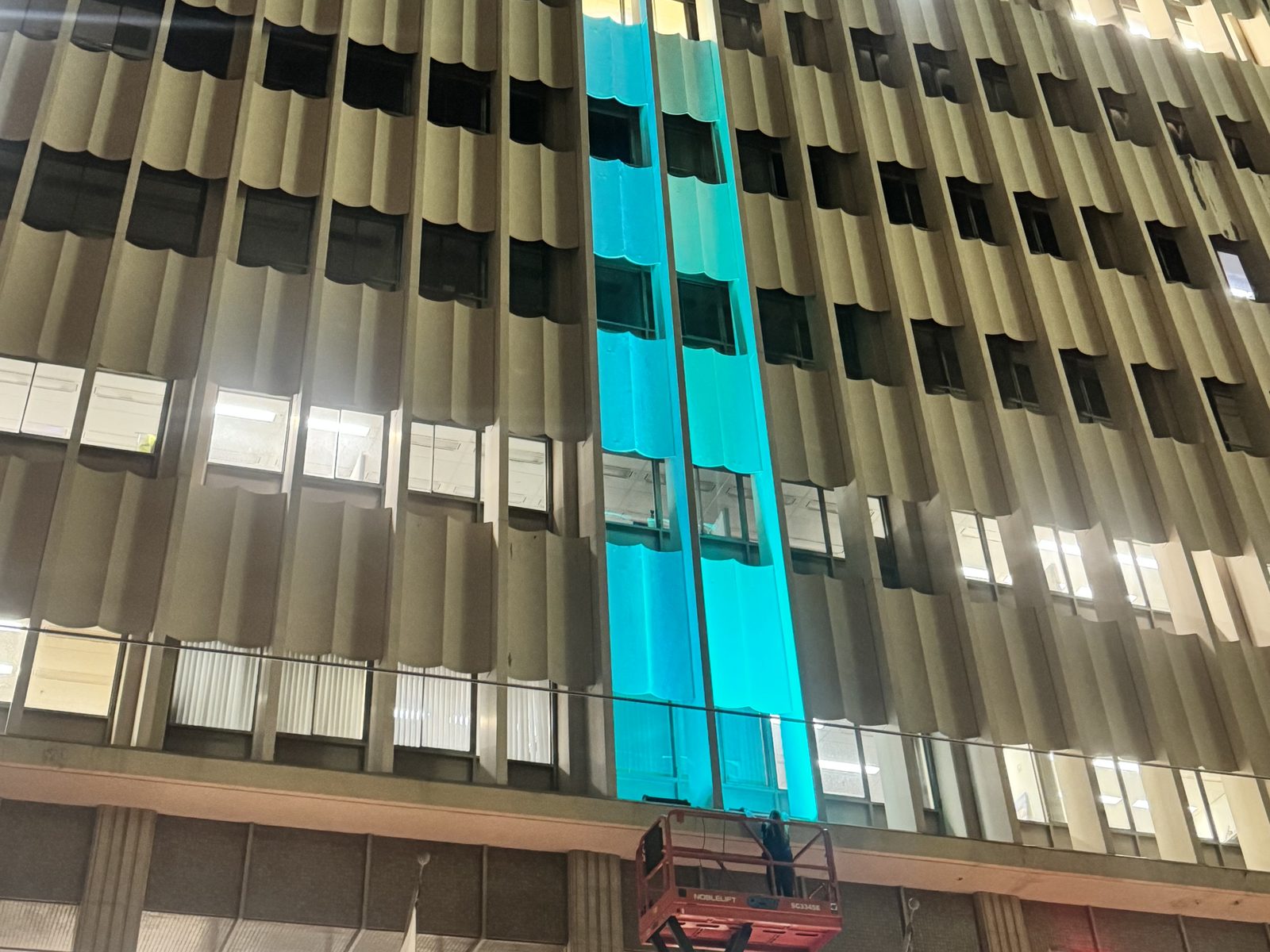
We look at mounting locations, throw distances, available power, surface finishes, and what the space actually gives us to work with. On a retrofit we also survey the existing fixtures, drivers and controller. Usually an hour.
Both equipment paths, fully costed — materials, labor, and general expenses broken out separately so you can see where the money goes.
We bring fixtures to the space and light it. This is where the option gets chosen and where the spread lenses get decided. It is the single most useful hour of the whole project.
Line-voltage circuiting, terminations, mounting, aiming, and low-voltage data. All work by licensed C-10 technicians, NEC and City of San Diego code compliant.
Control scenes built, schedules set, system commissioned with your sign-off. You get documentation and training, not a laptop that leaves with the tech.
Warranty
Every SDSL installation carries a one-year workmanship warranty from final commissioning — electrical connections, fixture mounting and alignment, control programming, wiring, and driver installation.
Extended three-year coverage is available at additional cost. Manufacturer product defects fall under the separate Signify / Color Kinetics warranty, which we pass through and administer on your behalf, so you're not the one on hold with a manufacturer's RMA desk.
Questions we get
Less than owners expect. A twenty-fixture installation adds roughly 600 W at 120 V with efficient wash luminaires, or around 2,000 W with high-output long-throw fixtures. We confirm your existing service can carry it during the site walk; if it can't, panel work gets quoted separately rather than buried.
No. Interior dynamic color and tunable white are a large share of our work — lobbies, ballrooms, restaurants, theaters and pool decks. Interiors need more attention to glare, color rendering and dimming behavior, but it's the same fixture families and the same control platform.
Often, yes. If the luminaires are still supported and the pathway is sound, a controller upgrade and reprogramming can transform a system for a fraction of a full replacement. We'll tell you honestly when the hardware has aged out and replacement is the better spend.
Yes. We build the scene set with you and hand over a control interface you can actually operate — holidays, brand colors, event overrides. We also keep service agreements for owners who'd rather call us for seasonal changes.
That's what Chromasync is for. Color consistency is specified at the manufacturer level so a replacement fixture matches the ones already installed — the failure mode that makes older color systems look patchy.
Non-destructive mounting and custom bracket fabrication are routine for us. We've worked on National Historic Landmark property and over-water infrastructure where nothing may be permanently modified.
Permits, engineered drawings, lift and access equipment, new service or panel work, and prevailing-wage adjustments are quoted separately unless specified. We itemize them rather than folding them into a single number.
Next step
An hour in the space tells us more than a week of drawings. Send a photo of the room or the building and we'll come look at it.